 Cart is empty


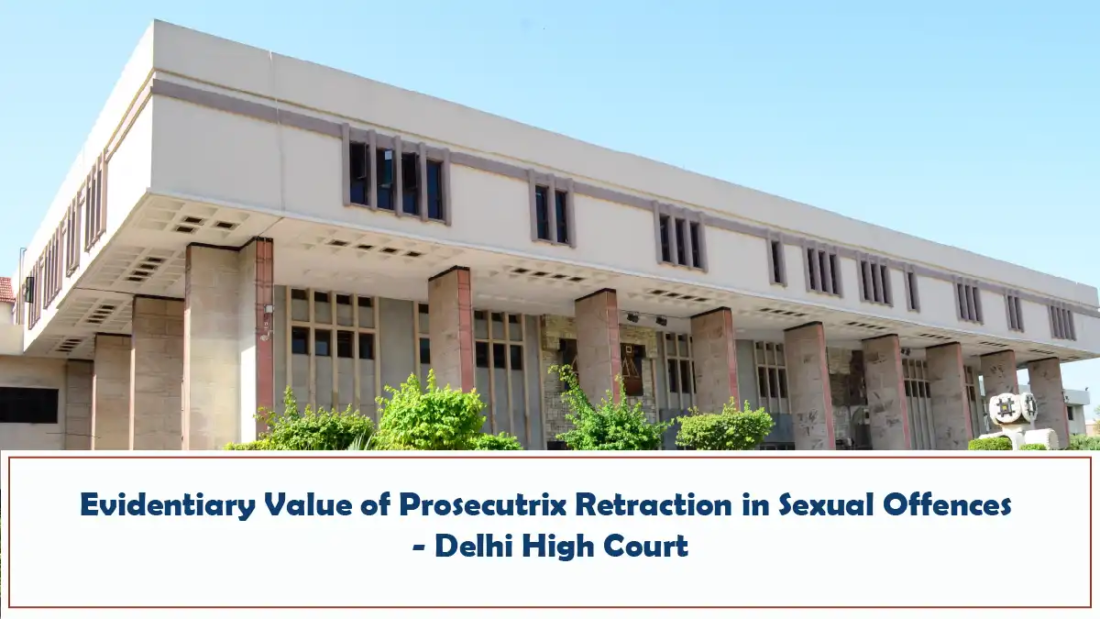
Case: Gayasuddin v. State (NCT of Delhi) (Delhi High Court, 2026)
Factual Background
The case arose from a bail application filed by the accused in connection with offences under the Bharatiya Nyaya Sanhita and Section 6 of the POCSO Act. The prosecution alleged that the accused had repeatedly engaged in sexual relations with the prosecutrix when she was a minor, under the false promise of marriage. The prosecutrix further alleged that she became pregnant on two occasions and was compelled to undergo abortions.
After attaining majority, the prosecutrix married the accused. During the trial, she retracted her earlier allegations, claiming that the FIR had been filed without her knowledge and that she had merely signed a document drafted by her lawyer. The accused relied on this retraction and the subsequent marriage to seek bail.
Court’s Analysis
The Delhi High Court carefully examined the credibility of the prosecutrix’s retraction. The Court noted that the prosecutrix was a law student and therefore it was difficult to accept her claim that she signed a detailed complaint without understanding its contents. It further observed that the prosecutrix had previously made a statement under Section 164 CrPC, where she had reiterated the allegations, thereby undermining her subsequent retraction.
The Court emphasised that offences under the POCSO Act are of a serious nature and that the consent of a minor is legally irrelevant. It held that subsequent marriage between the accused and the prosecutrix does not extinguish criminal liability for acts committed when the prosecutrix was a minor.
The Court also expressed concern that the marriage appeared to be a strategic move by the accused to secure bail, rather than a genuine development. It warned that granting bail in such circumstances could encourage misuse of the legal process and weaken the protective intent of the POCSO Act.
Order of the Court
The Delhi High Court dismissed the bail application, holding that the gravity of the allegations, the age of the prosecutrix at the time of the offence, and the questionable nature of her retraction did not justify grant of bail.
Key Takeaway
The judgment reiterates that marriage with the prosecutrix does not mitigate or extinguish criminal liability under the POCSO Act for offences committed when she was a minor. Courts will scrutinize retractions carefully, particularly where they appear to be motivated, and will prioritise the protection of minors and the seriousness of the offence over subsequent developments.
Written by Adv. K. Sri Hamsa