 Cart is empty

Factual Background
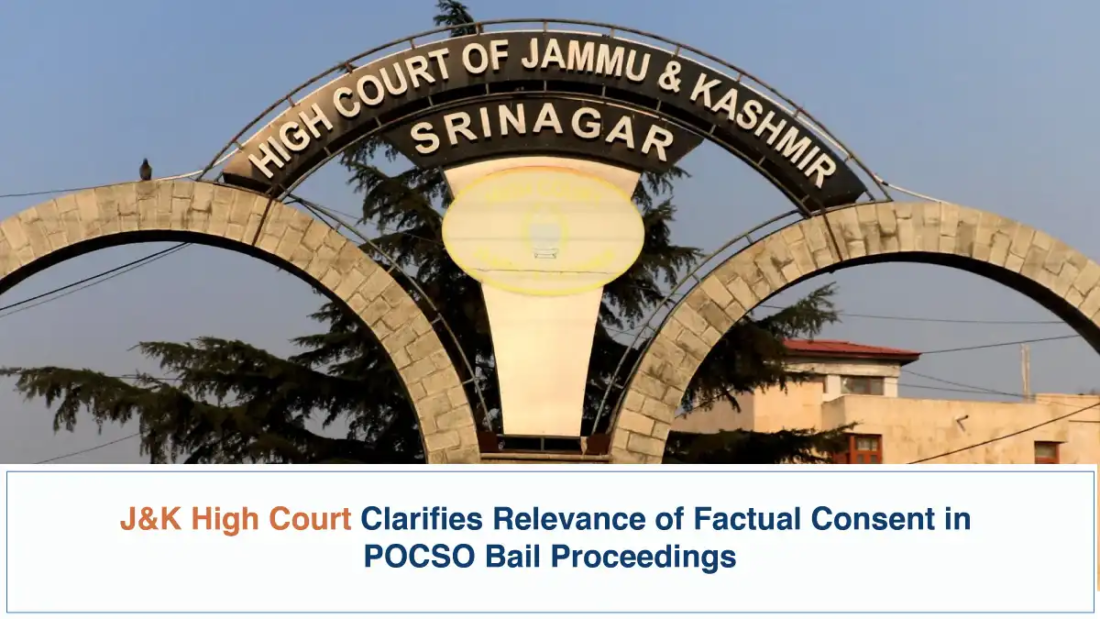
In Shahnawaz Amin Shah v. UT of J&K & Anr., the Jammu & Kashmir and Ladakh High Court considered a bail application filed under Section 483 of the Bharatiya Nagarik Suraksha Sanhita (BNSS) by an accused charged under Sections 64 and 137(2) of the Bharatiya Nyaya Sanhita (BNS) and Section 4 of the Protection of Children from Sexual Offences Act, 2012 (POCSO). The prosecution alleged that the petitioner had kidnapped a 16-year-old girl and taken her to a house in Dooru, Anantnag, where he had sexual intercourse with her. During investigation, the prosecutrix stated that she had developed a relationship with the petitioner after regular telephonic conversations and voluntarily met and travelled with him to Anantnag. She alleged that he introduced her as his wife before others and had forcible sexual intercourse with her. Documentary evidence established that she was a minor at the relevant time. Following completion of the investigation, a chargesheet was filed and charges were framed. By the time the bail application was heard, six out of sixteen prosecution witnesses, including the prosecutrix and her parents, had already been examined.
Court’s Analysis
The High Court observed that although the allegations were grave and the petitioner was facing prosecution under the POCSO Act, the evidence recorded during trial required careful consideration. The prosecutrix, during her deposition before the trial court, admitted that she had voluntarily accompanied the petitioner and entered a physical relationship with him because they were in love. Her mother also deposed that the prosecutrix had willingly left home, continued to reside with the petitioner’s family even after his arrest, and wished to marry him. The Court clarified that while a minor’s consent is legally irrelevant under the POCSO Act, the surrounding circumstances of a consensual adolescent relationship may still be relevant while deciding a bail application. Relying upon the Supreme Court’s observations in State of Uttar Pradesh v. Anurudh & Anr. regarding consensual relationships between adolescents, the Court held that such cases require a balanced approach to prevent injustice. The Court further noted that all material civilian witnesses had already been examined, substantially reducing the possibility of witness intimidation or evidence tampering if bail were granted.
Order of the Court
The High Court allowed the bail application and directed the release of the petitioner on bail upon furnishing a personal bond of ₹50,000 with two sureties of the like amount. The petitioner was directed to appear before the trial court on every date of hearing, not leave the territorial limits of the Union Territory of Jammu & Kashmir without prior permission of the trial court, and refrain from influencing witnesses or tampering with evidence.
Key Takeaway
The judgment reiterates that although a minor’s consent has no legal validity for determining criminal liability under the POCSO Act, the factual circumstances surrounding a consensual adolescent relationship may be relevant while considering bail. Where material witnesses have already been examined and the risk of influencing the trial is minimal, courts may exercise their discretion to grant bail without expressing any opinion on the merits of the criminal case.
Written by Adv. K. Sri Hamsa