 Cart is empty

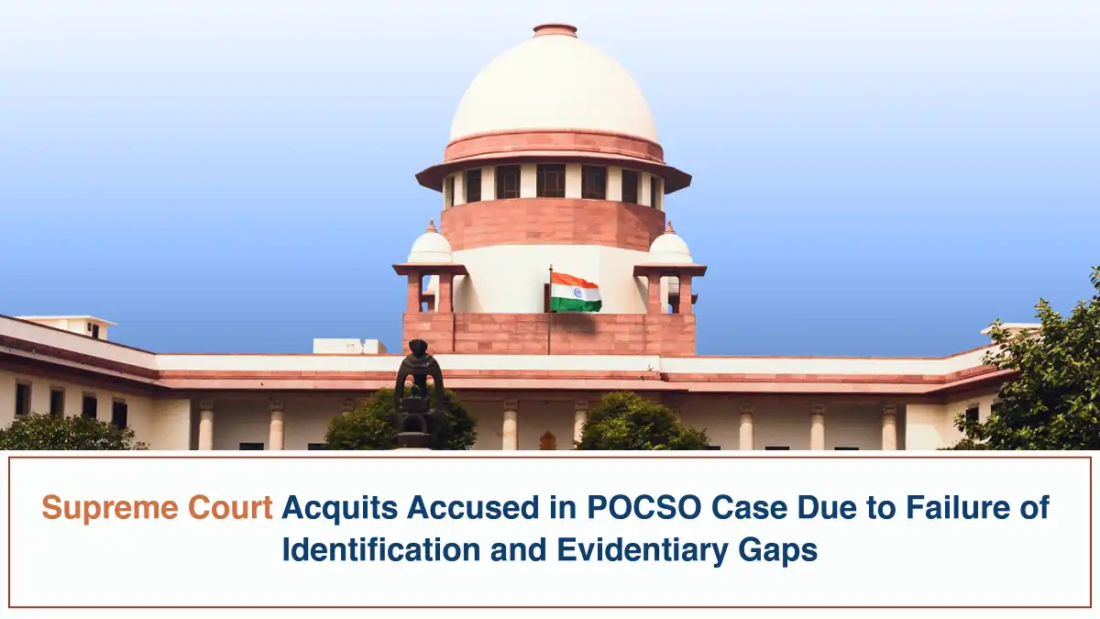
Case Name: Charming Rupon v. State of Meghalaya
Factual Background
The case arose from allegations that an 11-year-old girl suffering from 40% intellectual disability was sexually assaulted by the appellant, Charming Rupon, on 28 May 2015. According to the prosecution, the victim’s mother had left the house, leaving the child alone. The victim subsequently went to her cousin’s residence, where she allegedly disclosed the incident. Although the cousin informed the victim’s mother the following day, the mother did not immediately report the matter, as the child did not confirm the allegation when questioned.
The matter was reported after the victim allegedly disclosed the incident to her schoolteacher on 7 June 2015. An FIR was registered on 8 June 2015, approximately ten days after the alleged incident. Medical examination revealed injuries in the genital region, and the possibility of sexual assault could not be ruled out. However, the delay in reporting prevented the collection of scientific evidence, including serological evidence.
The Special Court convicted the appellant under Section 6 of the Protection of Children from Sexual Offences Act, 2012 (POCSO Act), sentencing him to ten years of rigorous imprisonment and a fine of ₹1 lakh. The Meghalaya High Court affirmed the conviction, prompting the appellant to approach the Supreme Court.
Court’s Analysis
The Supreme Court undertook a detailed reassessment of the prosecution evidence and identified significant inconsistencies affecting the credibility of the case. The victim and her cousin failed to identify the appellant during their testimony. Both indicated that they could not recall his face, and the victim admitted that her mother had supplied the accused’s name. The victim also stated that the Special Public Prosecutor had instructed her on what to say in court, raising concerns about the reliability of her testimony.
The Court further found inconsistencies in the mother’s account concerning the appellant’s relationship with the family and the circumstances preceding the alleged incident. The material
allegation that the mother had seen the appellant near the house was absent from the FIR. The omission of the cousin’s alleged disclosure to the mother the day after the incident was also significant.
The prosecution’s failure to examine the schoolteacher, Ms. Princely, who allegedly received the child’s disclosure and whose interaction prompted the complaint, warranted an adverse inference. The Court also held that the medical witnesses’ testimony could not be relied upon because the defence had not been given an effective opportunity to cross-examine them.
The Court rejected the prosecution’s reliance on Section 106 of the Indian Evidence Act, 1872, observing that the evidence did not establish that the appellant and the victim had been seen together immediately before the incident. Additionally, credible defence evidence supporting the appellant’s plea of alibi had been inadequately considered by the lower courts.
Order of the Court
The Supreme Court held that the cumulative effect of the material discrepancies, failure of identification, unexplained delay, non-examination of a crucial witness, procedural deficiencies in recording medical testimony and evidence supporting the plea of alibi rendered the conviction unsafe. It set aside the judgments of the trial court and the Meghalaya High Court, acquitted the appellant by granting him the benefit of doubt, and directed his release forthwith unless required in another case. The appeal was allowed.
Written by Adv. K. Sri Hamsa