 Cart is empty

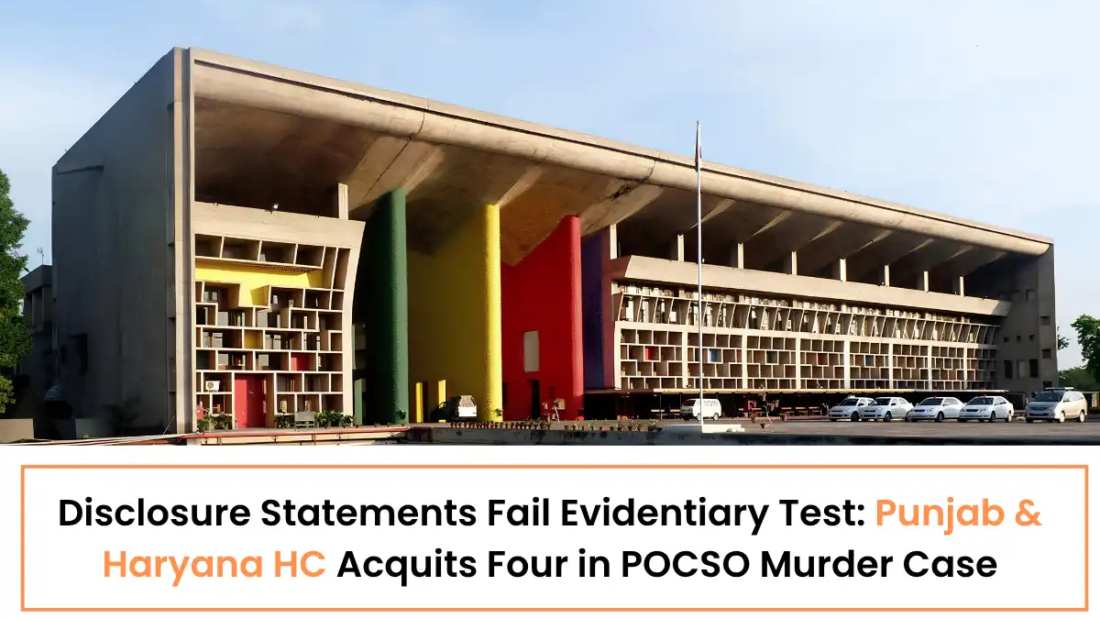
Case Name: State of Haryana v. Arun & Others
Factual Background
The case concerned the deaths of two minor sisters, aged approximately 13 and 12 years, who were initially taken to hospital on the explanation that they had suffered snake bites. Both subsequently died. The prosecution later alleged that four accused persons had entered the victims’ residence, sexually assaulted the girls and forcibly administered poison to them. The accused were convicted by the Trial Court for offences including Sections 376DA, 376AB, 302, 328, 506 and 120-B IPC and Section 6 POCSO and were sentenced to death for rape and murder. The matter reached the High Court through the criminal appeal and death reference.
A major part of the prosecution case rested upon the victims’ mother, PW1, the alleged disclosure statements of the accused and recovery of a parna and poison bottle, together with forensic evidence. However, PW1 did not support the prosecution during trial and denied making the complaint and Section 164 CrPC statement. She also failed to identify the accused during the proceedings.
Court’s Analysis
The High Court accepted that the medical evidence established that the victims had been subjected to sexual assault. The critical question, however, was whether the prosecution had legally admissible evidence connecting the four accused with those offences. The Court found substantial inconsistencies between the mother’s earliest statement, the subsequent written complaint, her Section 164 statement and her testimony at trial. Her first account referred to snakebite; the later complaint named all four accused; yet the Section 164 statement recorded the following day stated that she knew only one name and could recognise the others by face. The Court considered these contradictions material.
The Court further held that a Section 164 CrPC statement is not substantive evidence. Substantive evidence is the testimony given before the trial court, subject to cross-examination. The Section 164 statement may have corroborative or contradictory value in accordance with law but cannot simply substitute for substantive trial testimony.
The judgment’s central evidentiary discussion concerned disclosure statements and discovery under Section 27 of the Indian Evidence Act, 1872. The Court emphasised that the discovery must genuinely result from information supplied by the accused and that the discovered fact must not have already been known to the investigating agency. In the case of the parna, the crime-scene report dated 11 August already recorded its presence before the alleged disclosure statements dated 12 August. Further, the recovery was not made from the place identified in the disclosures. Consequently, the alleged recoveries did not satisfy the requirements of Section 27.
The poison-bottle recovery suffered from similar defects. The crime-scene report had already recorded that a metallic container containing poisonous liquid had been taken into possession before the alleged disclosures. The later recovery concerned a plastic bottle containing herbicide. The Court therefore found serious inconsistencies regarding the alleged discovery. The forensic evidence also failed to connect the accused with the offence. DNA profiles of the four accused could not be matched with biological material recovered from the victims or the parna. Thus, although the existence of sexual assault was established, the scientific evidence did not establish that these accused were the perpetrators.
Order of the Court
The High Court allowed the criminal appeal, set aside the convictions and sentences of all four accused and acquitted them of all charges. The death reference was dismissed, and directions were issued for their immediate release subject to personal bonds.
Written by Adv. K. Sri Hamsa