 Cart is empty

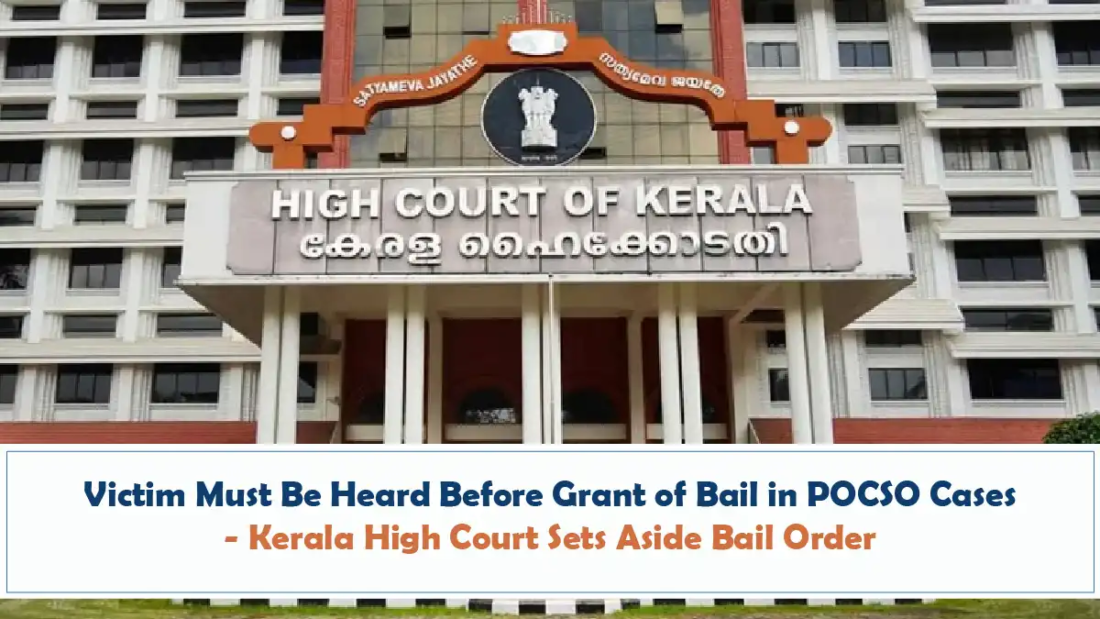
Case: X v. State of Kerala – Kerala High Court
Factual Background
The petitioner, who is the father and guardian of the minor victim, approached the Kerala High Court challenging a bail order passed by the Sessions Court granting bail to the accused in a case registered under the Bharatiya Nyaya Sanhita (BNS) and the Protection of Children from Sexual Offences Act, 2012 (POCSO Act). The petitioner contended that the Sessions Court granted bail to the accused without issuing notice to the victim or providing an opportunity to be heard.
The prosecution case alleged that the accused trespassed into the residence of the victim, a 14-year-old minor boy, and committed penetrative sexual assault upon him. It was further alleged that the accused threatened the victim not to disclose the incident. The accused was arrested shortly thereafter and was later granted bail by the Sessions Court.
Aggrieved by the grant of bail, the victim’s guardian filed the present petition seeking cancellation of the bail order, contending that the victim’s right to participate in the proceedings had been ignored.
Court’s Analysis
The High Court examined the statutory framework governing victim participation in criminal proceedings, particularly in cases involving offences under the POCSO Act. The Court referred to Section 40 of the POCSO Act which recognises the right of the child and their guardian to seek assistance of legal counsel in proceedings relating to offences under the Act. The Court also relied on Rule 4 of the POCSO Rules, 2020, which obligates authorities to keep the child and their guardian informed about developments in the case, including applications filed and court proceedings.
Further, the Court considered Section 483(2) of the Bharatiya Nagarik Suraksha Sanhita (BNSS), which mandates the presence of the informant or an authorised person during the hearing of bail applications in serious offences. These provisions reflect the legislative intent to ensure that victims are informed and allowed to participate in proceedings affecting their rights.
The Court also relied on precedents including Arjun Kishanrao Maige v. State of Maharashtra and the Supreme Court’s judgment in Jagjeet Singh v. Ashish Mishra, which recognised that victims possess a substantive right to be heard at crucial stages of criminal proceedings, including the consideration of bail applications.
Order of the Court
The Kerala High Court held that the Sessions Court granted bail without issuing notice to the victim and without providing an opportunity to be heard, thereby violating the statutory rights of the victim.
Accordingly, the High Court set aside the bail order passed by the Sessions Court and cancelled the bail granted to the accused. The accused was directed to surrender before the Sessions Court within seven days. The Sessions Court was further directed to reconsider the bail application afresh after providing the victim an adequate opportunity to be heard and to dispose of the application within one month.
Key Takeaways
• Victims in POCSO cases have a statutory right to be informed and heard during bail proceedings.
• Courts must ensure compliance with Section 40 of the POCSO Act and Rule 4 of the POCSO Rules.
• Granting bail without hearing the victim can render the order legally unsustainable.
• The judgment reinforces the growing recognition of victim participation in criminal proceedings.
Written by Adv. K. Sri Hamsa