 Cart is empty

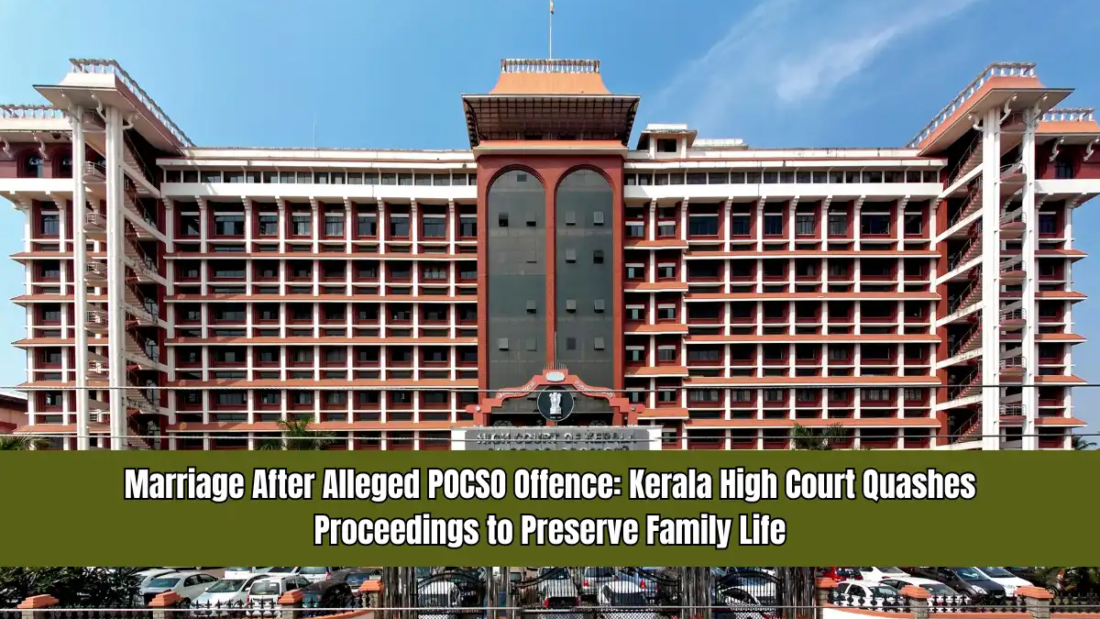
Case: XXX v. State of Kerala (Crl.M.C No. 596 of 2023, Kerala High Court, Feb 2026)
Factual Background
The petitioner, the first accused in Crime No.1126/2021 of Pallikkathode Police Station, was charged under Section 376(3) IPC and Sections 5(j)(ii), 5(l), 5(n) and 6 of the Protection of Children from Sexual Offences Act (POCSO). The prosecution alleged that the accused repeatedly committed penetrative sexual assault on a minor girl aged below 16. The matter was pending before the Fast Track Special Court, Changanassery. During pendency of proceedings, the petitioner submitted that the dispute between him and the de facto complainant had been amicably settled and that he married the victim in December 2024. The victim also filed an affidavit confirming the settlement and requested termination of criminal proceedings in order to preserve their marital life and family stability.
Court’s Analysis
The High Court considered whether criminal proceedings involving grave offences under the POCSO Act could be quashed on the ground that the accused subsequently married the victim. Relying on earlier judicial precedents, the Court noted that in exceptional circumstances factors such as the genuineness of settlement, welfare of the victim, likelihood of conviction, and continuation of family life may be considered. The Court observed that when the victim voluntarily marries the accused and is leading a stable family life, continuation of prosecution may cause further trauma and disrupt familial harmony. The victim’s affidavit, marriage certificate, and absence of coercion indicated a bona fide settlement. As the victim was the principal witness and unwilling to testify against her husband, the chances of conviction were remote. The Court nevertheless cautioned that such power must be exercised sparingly and only where quashing advances the ends of justice and prevents abuse of process.
Order of the Court
The Court allowed the petition and quashed proceedings against the petitioner in Crime No.1126/2021 pending before the Fast Track Special Court. It held that in the peculiar facts of the case where the accused had married the victim and they were living peacefully continuation of prosecution would disturb family harmony and cause unnecessary hardship.
Key Takeaway
While offences under the POCSO Act are serious and ordinarily non-compoundable, High Courts may invoke inherent powers under Section 482 CrPC in rare and exceptional situations where a genuine settlement exists and continuation of proceedings would result in greater injustice to the victim. The judgment underscores the need to balance strict enforcement of child protection laws with the welfare of the victim and the realities of subsequent circumstances.
Written by Adv. K. Sri Hamsa